LEARNING HUB
What is Padel? And Why Is It Growing In Popularity?
Padel is the fastest-growing racket sport in the UK, with court numbers tripling in just three years to over 1,800.
But it’s not just here that it is gaining popularity; the sport continues to gain more recognition worldwide, as padel is not only fun and easy to pick up, but also highly social, making it a great way for people of all levels to stay active and healthy.
What is Padel?
Padel is a racket sport that is essentially a blend of tennis and squash, invented in Mexico in 1969.
The sport now has around 35 million players worldwide, according to the International Padel Federation.
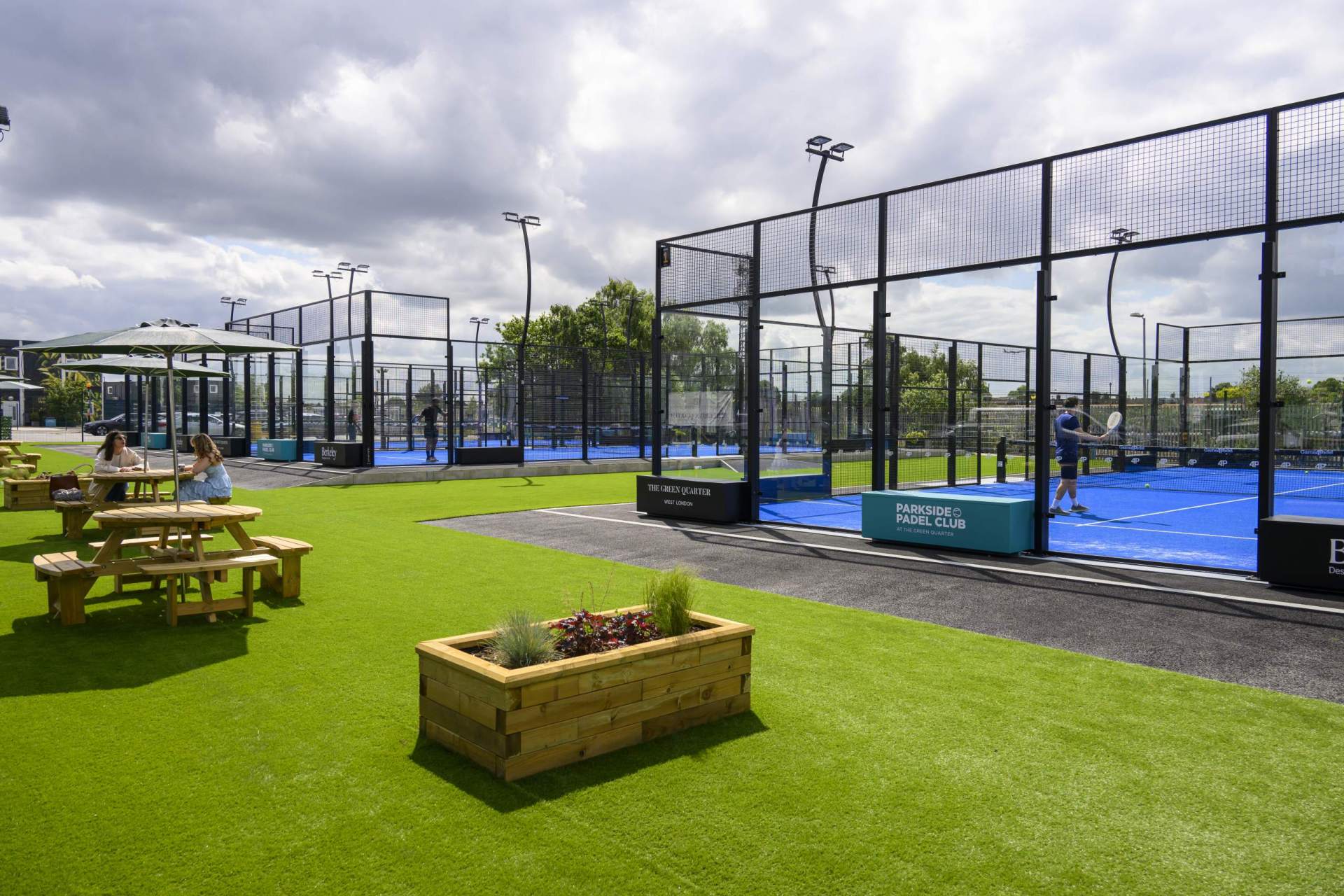
The game is usually played in doubles, using solid rackets with no strings attached. The padel courts are enclosed, allowing players to bounce the ball off the walls, which is similar to squash.
Padel balls are smaller than those used in tennis, and players serve underarm.

The history of padel
In 1969, the couple, Enrique Corcuera, a Mexican businessman, and his wife, Viviana, were at their holiday home in Las Brisas, at Acapulco.
Enrique initially wanted a tennis court, but there wasn’t enough space in his backyard, and he was restricted by the existing property walls.
Instead, the couple built a cement court, 20 metres long by 10 metres wide, with four-metre walls to keep balls from escaping, and in doing so, created a new game.
They enjoyed their version of the game so much that they decided to make it official. Enrique Corcuera created rules allowing the ball to bounce off the walls during rallies, and his wife, Viviana, wrote the first official rulebook.

How to play padel?
- The game starts with an underarm serve to the opposite diagonal area. To keep the ball in play, each shot must first pass over the net and bounce on the court (within the service box) before hitting the wall or mesh; otherwise, the shot is out.
- The serve can bounce and hit the wall, but if it hits the mesh fence, the serve is considered out. On the other hand, during a rally, it works differently because if the ball bounces one time and hits the mesh, the shot is in, and the game continues.
- Only one bounce is allowed on the floor before you hit the ball; otherwise, your opponent wins the point.
- Regarding the scoring system, think of the scoring like tennis: 15, 30, 40, game. To win a game, you need 4 points and to be 2 points ahead of your opponent. To win a set, you have to win 6 games but be 2 games ahead of your opponent. If the set reaches 6–6, a tiebreak decides the winner.
Why is padel so popular?
One of the key attractions of padel is its strong social element. It is a beginner-friendly racket sport that naturally encourages participation, mainly because it is played in doubles.
It creates a fun and interactive atmosphere on court, promoting communication, laughter, and teamwork.
Additionally, playing in doubles makes the sport more affordable, as court hire and other costs can be shared between players, making it cheaper per person.

A sport for all ages and abilities
Padel is inclusive, open to all ages and abilities, from grandparents to young children.
The low barrier to entry helps new players gain confidence faster than in most sports. An underarm serve and longer rallies make it easier to keep the ball going.
Padel is also less physically demanding than tennis. The smaller court, underarm serve, and shorter racket movements all take pressure off the body.
This makes it a sport that people can continue enjoying well into older age, with many players in their seventies and beyond.
The feeling of “I can do this” is what keeps many people coming back to padel.
Players often find the sport highly addictive due to its fast-paced, engaging gameplay and the sense of achievement they experience from the very start.
Another advantage of padel is the smaller size of its courts. You can fit three padel courts in the same space required for one tennis court, making it cheaper to install, which has likely contributed to its rapid expansion.
Which celebrities play padel?
Padel has even become a much-loved sport among celebrities, extending from sports into Hollywood. In football, figures such as Pep Guardiola, ex-manager of Manchester City, have built padel courts at their training facilities.
David Beckham, the ex-England captain and Manchester United player, is also a huge padel fan.
Beckham says:
“You can play at any level, whether you’re a child or an adult. It’s growing a lot, even within the clubs. I already know many friends and former teammates who are hooked, and that’s incredible.”
While Cristiano Ronaldo and Zinedine Zidane have both invested in building padel courts, too.
Meanwhile, tennis professionals have also contributed to the sport’s growth.
Players such as Jamie Murray and Tim Henman have been involved with padel for many years, while Andy Murray has even invested in Game4Padel, which is an organisation dedicated to developing padel courts across the UK.
Beyond sport, padel has also gained attention in the entertainment industry, with famous figures such as Tom Holland and Eva Longoria sharing their interest in the game on social media, further contributing to its growing popularity.
The future of padel
With padel continuing to grow in popularity thanks to its visibility among athletes and celebrities, interest in the sport has never been higher.
According to the Playtomic Global Padel Report, the industry is projected to reach around 91,000 courts globally by 2028, up from approximately 58,000 today, with nearly 8,000 new courts added in 2025 alone.
The sport is also broadening its appeal, with female participation rising from 28% of players in 2021 to around 35% in 2024.
As more people look to get involved and experience the game for themselves, the demand for quality padel facilities and court installations continues to rise as well.
Explore more about Padel
Want to see more padel content? Explore our padel page to discover different court styles, customisable options, and installed courts.
We can guide you through the entire process, with clear advice on available options, as well as costs, timescales, and suitability.